Free Shipping Worldwide
AI Patch Design is FREE - No Design Skills Needed | Try It Now →

Backing Guide

What the back of your patch looks like

The front is the part you design. The back is the part that decides how the patch attaches — and it is the one spec most people pick without ever having seen it. Here is each option from behind, what it is for, and what it adds.

Design a patch freeSee full pricing

The short answer

If you only read one line:

Uniforms and anything that gets washed

Sew-on. It outlasts every adhesive and costs nothing extra.

Swappable morale and tactical patches

Hook, or full hook-and-loop if the garment has no loop panel.

Hats, bags and jackets, applied at home

Iron-on, on a fabric that can take the heat.

Events, giveaways and anything temporary

Adhesive. Peel, stick, done — and not meant to last.

Every backing we make

Prices are per patch and read live from our price sheet, so what you see here is what the calculator charges. They differ by patch type where the material does.

All nine at a glance

Tap any one for the detail.

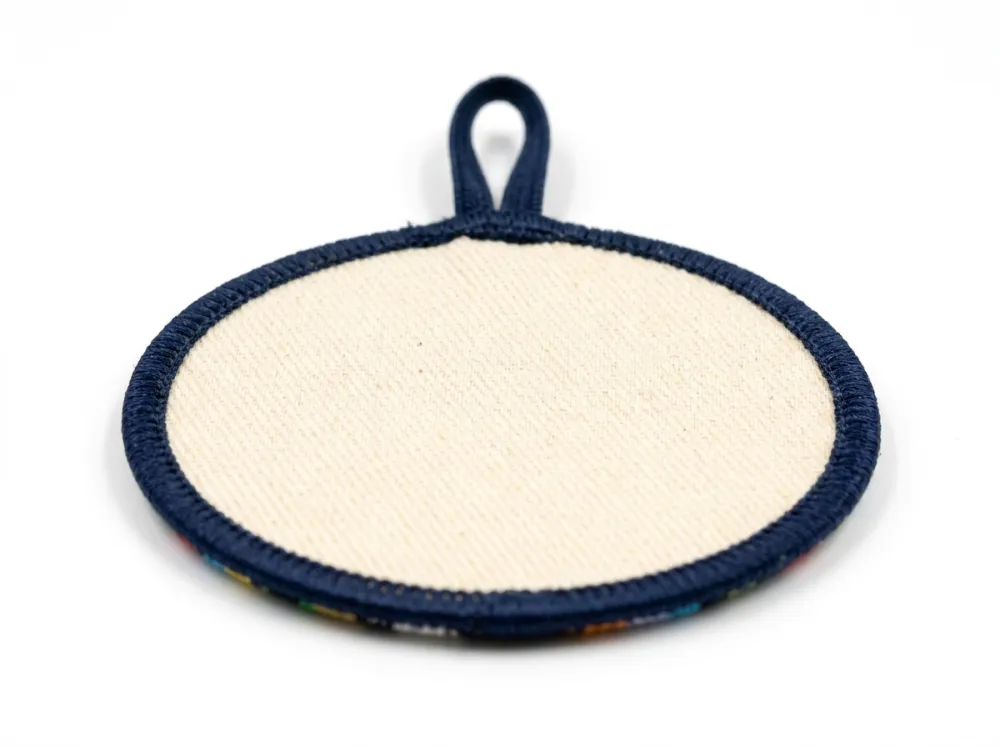
Sew-on (standard) — the back of an embroidered patch, seen close up

Sew-on (standard)

Included

Plain fabric, with the merrowed or die-cut edge running right around it. Nothing added, nothing shiny.

Best for
Uniforms, workwear, scout sashes, letterman jackets — anything that will be washed for years.
The trade-off
Somebody has to sew it. That is a few minutes by hand or a minute on a machine, per patch.
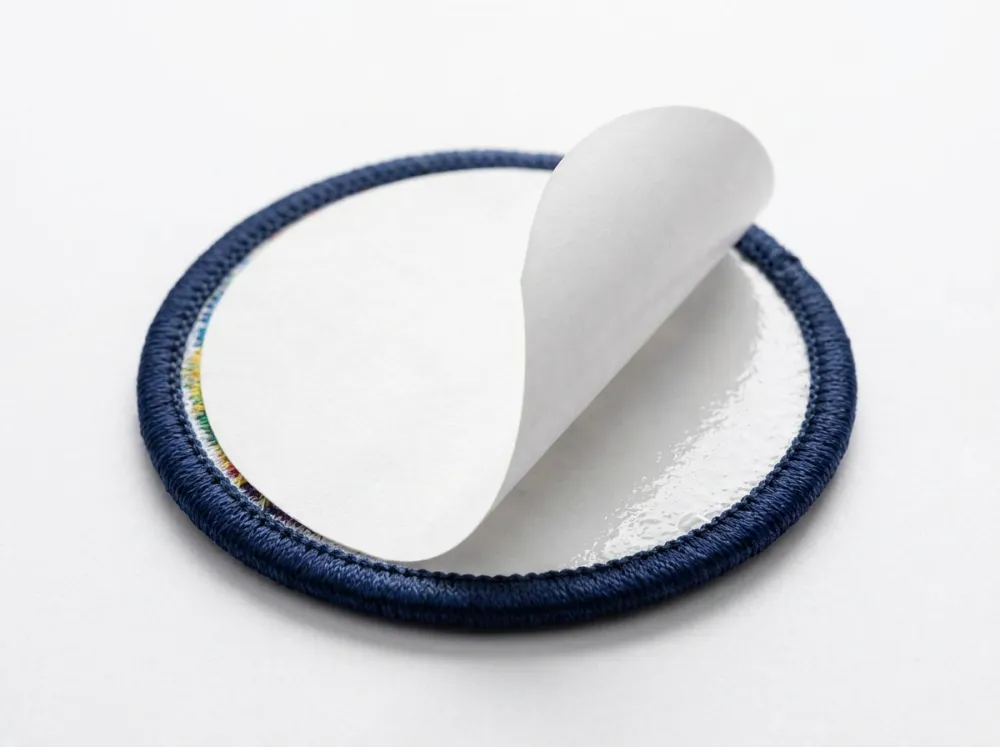
Iron-on (heat seal) — the back of an embroidered patch, seen close up

Iron-on (heat seal)

+$0.15–0.25

A thin, slightly glossy film across the whole back. You can see the weave through it.

Best for
Hats, bags, denim and cotton jackets applied at home, with no sewing kit involved.
The trade-off
It needs a fabric that takes real heat, so nylon, vinyl and most waterproof shells are out. A heavily washed patch will eventually want a few stitches at the corners.

Shown in the designer as: Iron-on backing

Available on: Embroidered, Woven, Chenille, Printed / Sublimated

How to apply an iron-on patch
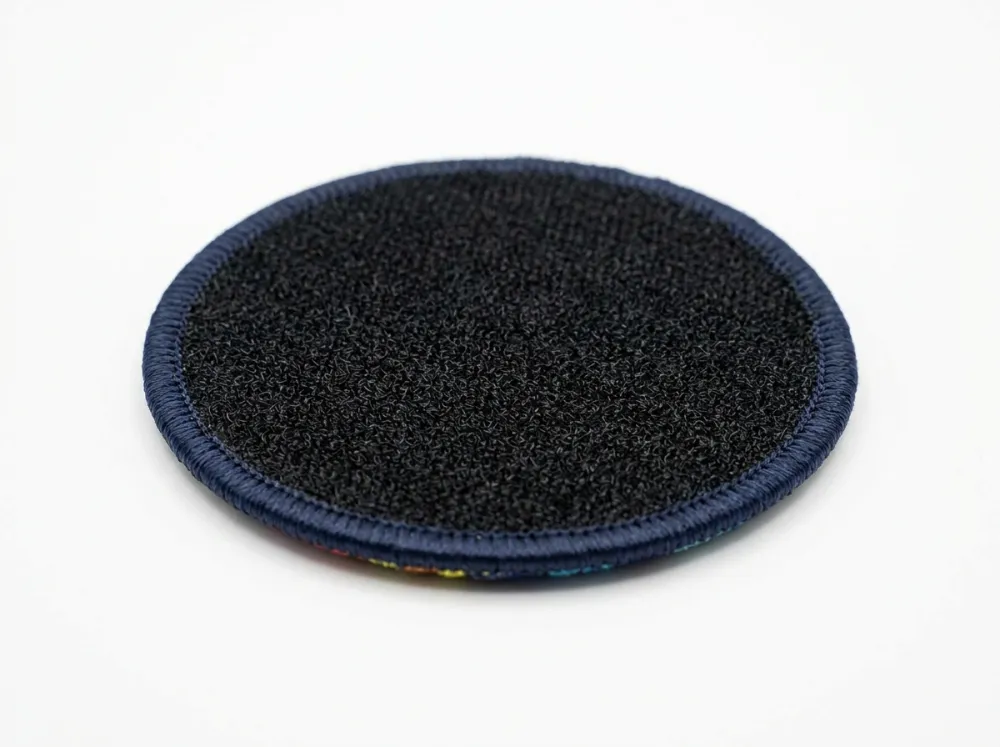
Hook (the stiff half of velcro) — the back of an embroidered patch, seen close up

Hook (the stiff half of velcro)

+$0.45–0.60

A dark, rigid pad of tiny hooks covering the back. Rough to the touch, and it will catch on a knit sleeve.

Best for
Plate carriers, flight suits, range bags and ball caps that already carry a loop panel.
The trade-off
Useless on its own — the garment has to supply the soft loop side. If it does not, take the full hook-and-loop below.

Shown in the designer as: Hook backing

Available on: Embroidered, Woven, Printed / Sublimated, PVC 2D, PVC 3D

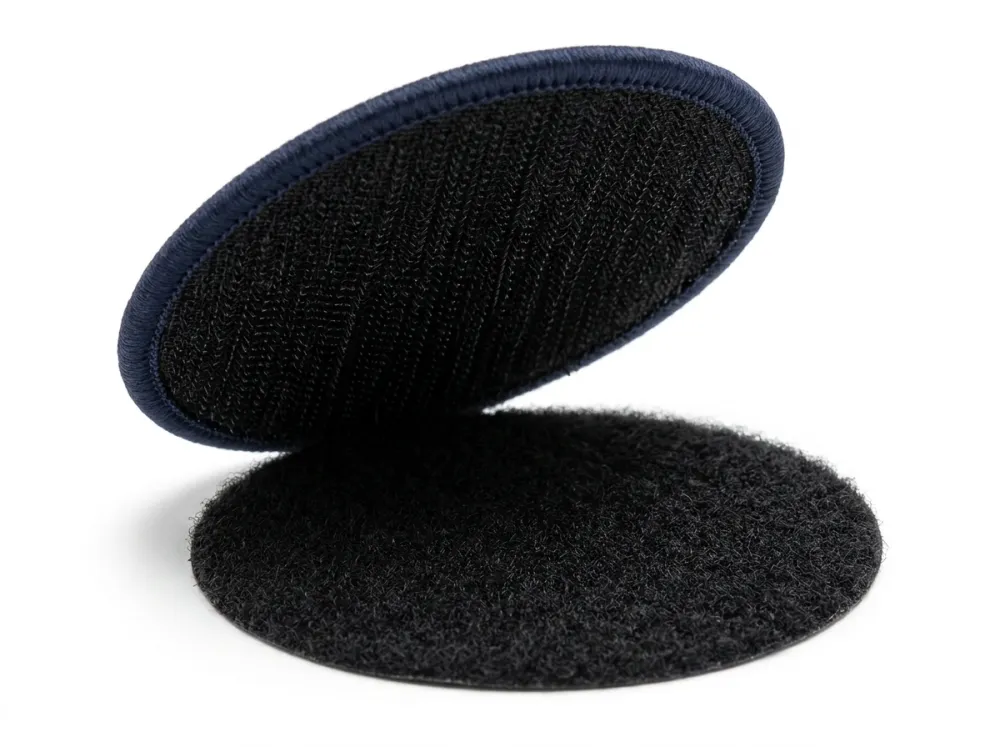
Hook and loop (both halves) — the back of an embroidered patch, seen close up

Hook and loop (both halves)

+$0.75–0.90

The same hook pad on the patch, plus a separate soft loop square shipped loose with it.

Best for
Swapping one patch for another on a garment that has no velcro on it yet.
The trade-off
The loop half still has to be sewn or stuck to the garment once. It is also the most expensive backing we make.

Shown in the designer as: Hook & loop (full velcro) / Hook & loop backing

Available on: Embroidered, Woven, Chenille, Printed / Sublimated

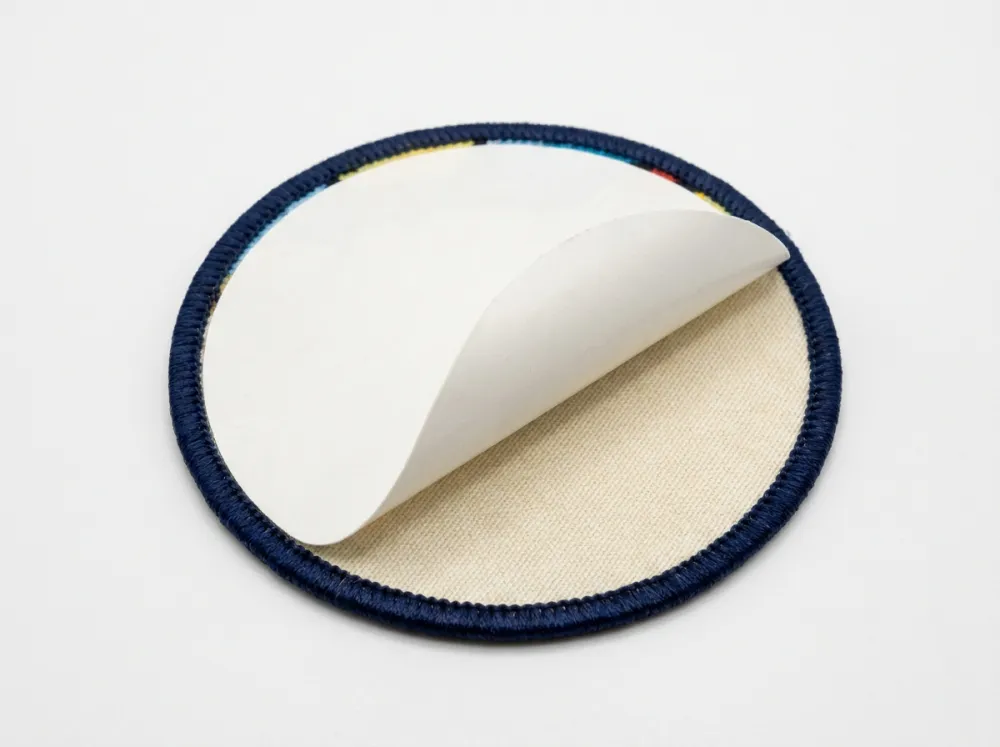
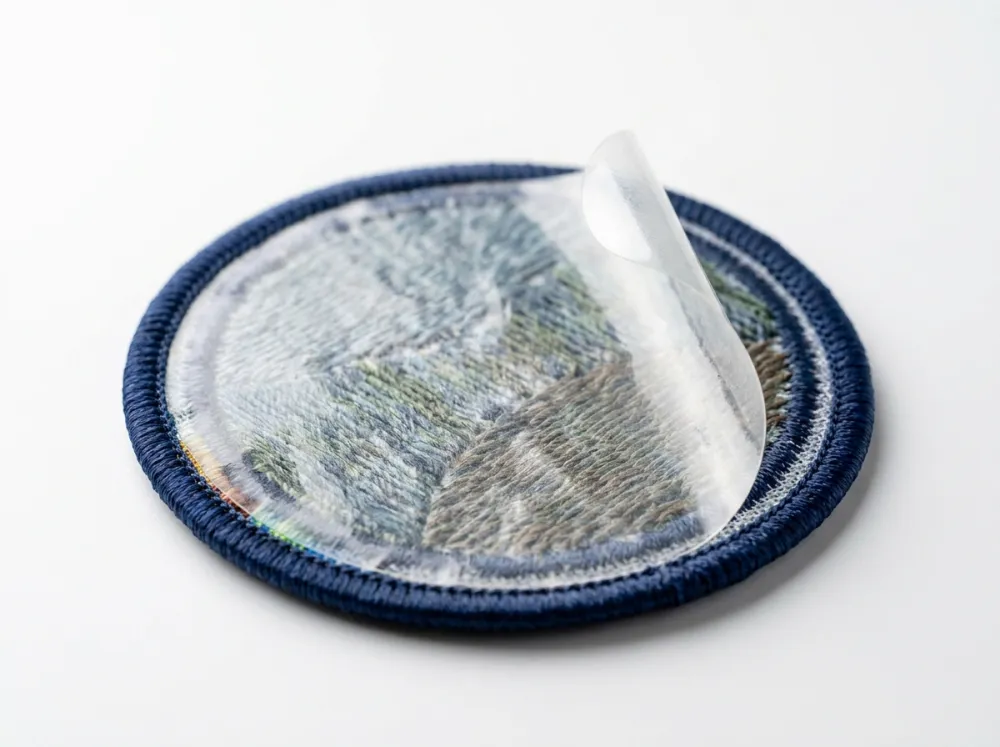
Adhesive (peel and stick) — the back of an embroidered patch, seen close up

Adhesive (peel and stick)

+$0.20–0.30

A paper liner over a pressure-sensitive glue. You peel the liner off and press it down.

Best for
Conference badges, one-day events, sample boards, giveaways — anything that only has to hold for an afternoon.
The trade-off
It is not a laundry backing and does not pretend to be. Expect it to lift, and expect it to lift sooner on a textured fabric.

Shown in the designer as: Adhesive back / Peel & stick backing

Available on: Embroidered, Woven, Chenille, Printed / Sublimated

Sew-on with a button loop — the back of an embroidered patch, seen close up

Sew-on with a button loop

+$0.10

A plain sew-on back with a short fabric loop stitched to the top edge.

Best for
Scout uniforms and anything that hangs from an existing button rather than sitting flat.
The trade-off
Only worth it where a button is already part of the garment.

Shown in the designer as: Sew On + Button Loop

Available on: Embroidered, Woven

Plastic backing (stiffener) — the back of an embroidered patch, seen close up

Plastic backing (stiffener)

+$0.15

A thin, rigid white sheet laminated to the back so the patch cannot curl.

Best for
Large printed patches that would otherwise ripple, and anything that has to sit flat on a firm surface.
The trade-off
Stiff by design, so it fights a curved surface like a cap panel or a sleeve.

Shown in the designer as: Plastic backing

Available on: Printed / Sublimated

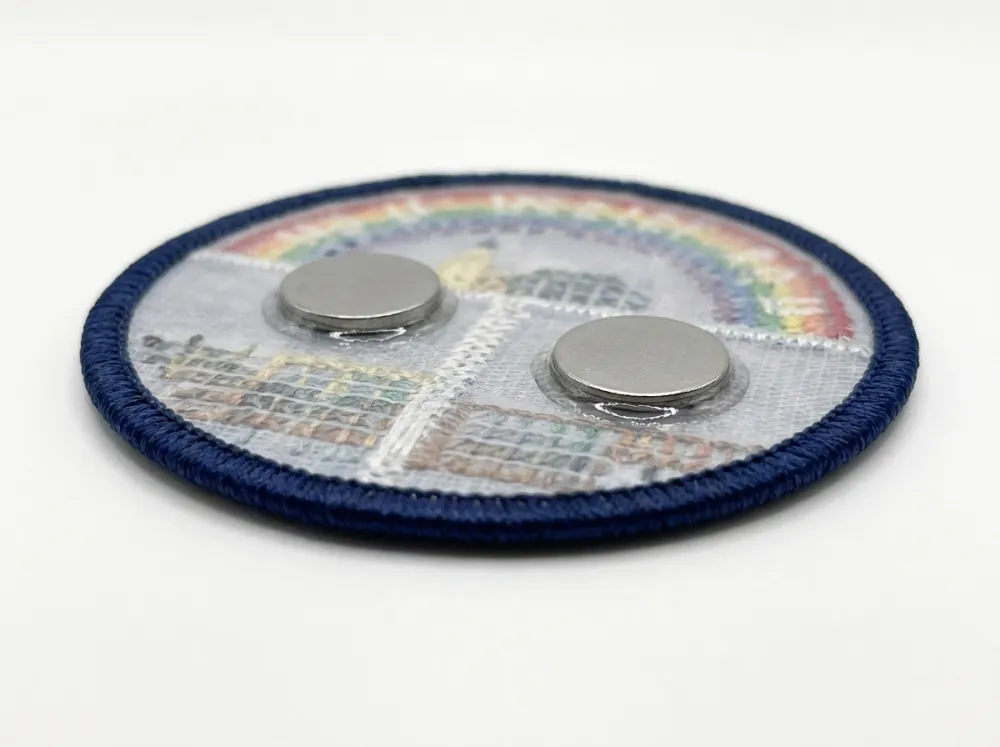
Magnetic — the back of an embroidered patch, seen close up

Magnetic

Special order

Flat magnet discs set into the back, with a second set that sits inside the garment.

Best for
Name badges and anything on a shirt or jacket you refuse to put a hole in.
The trade-off
Size-limited, quoted individually, and it will not survive a tumble dryer. Keep it away from cards and pacemakers.

Shown in the designer as: Magnetic back (up to 4")

Available on: Embroidered, Woven, Printed / Sublimated

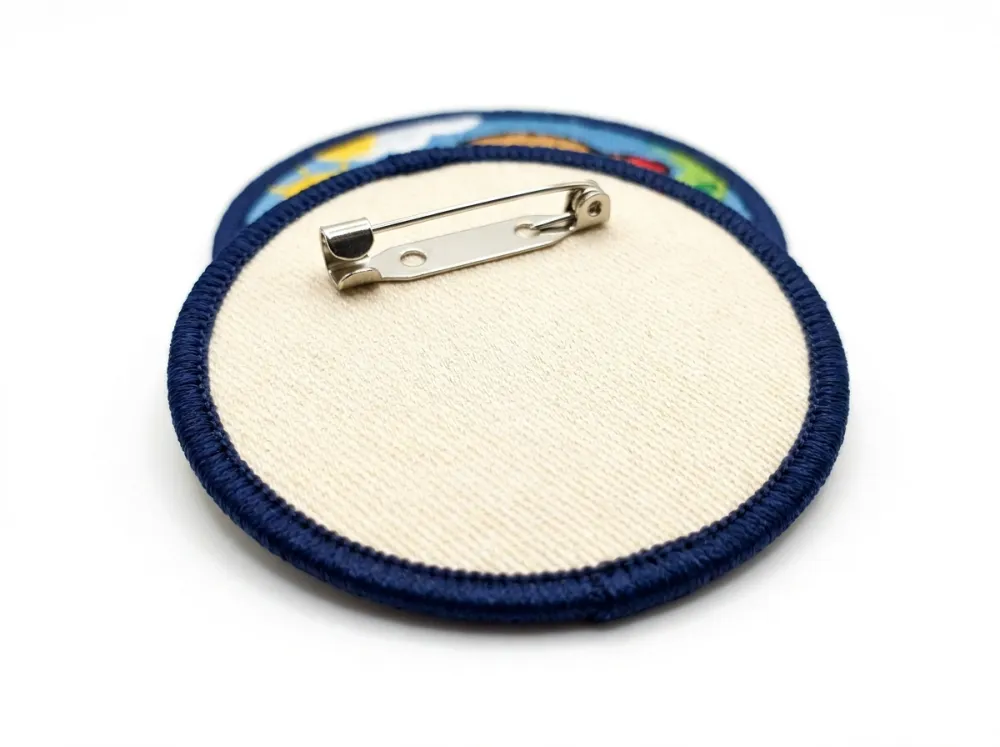
Pin back — the back of an embroidered patch, seen close up

Pin back

Special order

A metal bar pin riveted across the back, with a clasp at one end.

Best for
Lapels, vests, hats and trade-show badges that move between garments daily.
The trade-off
It puts two holes in whatever it is pinned to, and it is quoted individually rather than priced self-serve.

Shown in the designer as: Pin back

Available on: Embroidered, Woven, Printed / Sublimated

The pictures above are illustrations, made to show the texture and construction of each backing. Your own patch is made to your artwork, so its shape, border and thread colors will be your own.

Common questions

Which backing is included in the price?

Standard sew-on. Every patch we make comes with a plain sew-on back at no extra cost — the other backings are a per-patch addition on top of it.

Can I have more than one backing on the same patch?

No. A patch has exactly one backing, because they occupy the same face. The closest thing to a combination is the sew-on with a button loop, which is a single option in its own right.

Will an iron-on patch survive the wash?

Usually, for a while. Heat-seal adhesive is genuinely strong, but repeated hot washes and tumble drying work it loose from the edges inward. If the garment is washed weekly, a dozen stitches around the border will keep it there for the life of the garment.

What is the difference between hook backing and hook and loop?

Hook backing is the stiff hooked half only, and assumes your garment already has the soft loop side on it. Hook and loop supplies both halves — the hook on the patch and a loose loop square to attach to the garment once.

Can I change the backing after I order?

Before the patches are made, yes — reply to your order email and we will adjust it. Once the run has started, the backing is applied and changing it means a new run.

Do PVC patches take every backing?

No. Moulded rubber will not hold a heat-seal film or an adhesive the way fabric does, so PVC is offered with hook backing, and sew-on remains the standard.

Design the front. We will sort the back.

Every backing above is a tick box in the designer, priced as you go. Start with the artwork and choose the backing when you order.

Design a patch free